Deep-Sky Astrophotography Basics
Essential techniques for capturing nebulae, galaxies, and star clusters
What Counts as Deep-Sky?
In astrophotography, "deep-sky" refers to objects beyond our solar system—primarily emission and reflection nebulae, planetary nebulae, galaxies, star clusters, and supernova remnants. These targets present unique imaging challenges because they're extremely faint, require long exposures, and demand precise tracking to avoid star trailing during minutes-long integrations.
Unlike planetary imaging, which uses high frame rates and lucky imaging techniques to freeze atmospheric turbulence, deep-sky work prioritizes total light-gathering time. Success depends on accumulating signal through many long exposures, then calibrating and stacking them to reveal structures invisible to the naked eye.
Primary Deep-Sky Categories
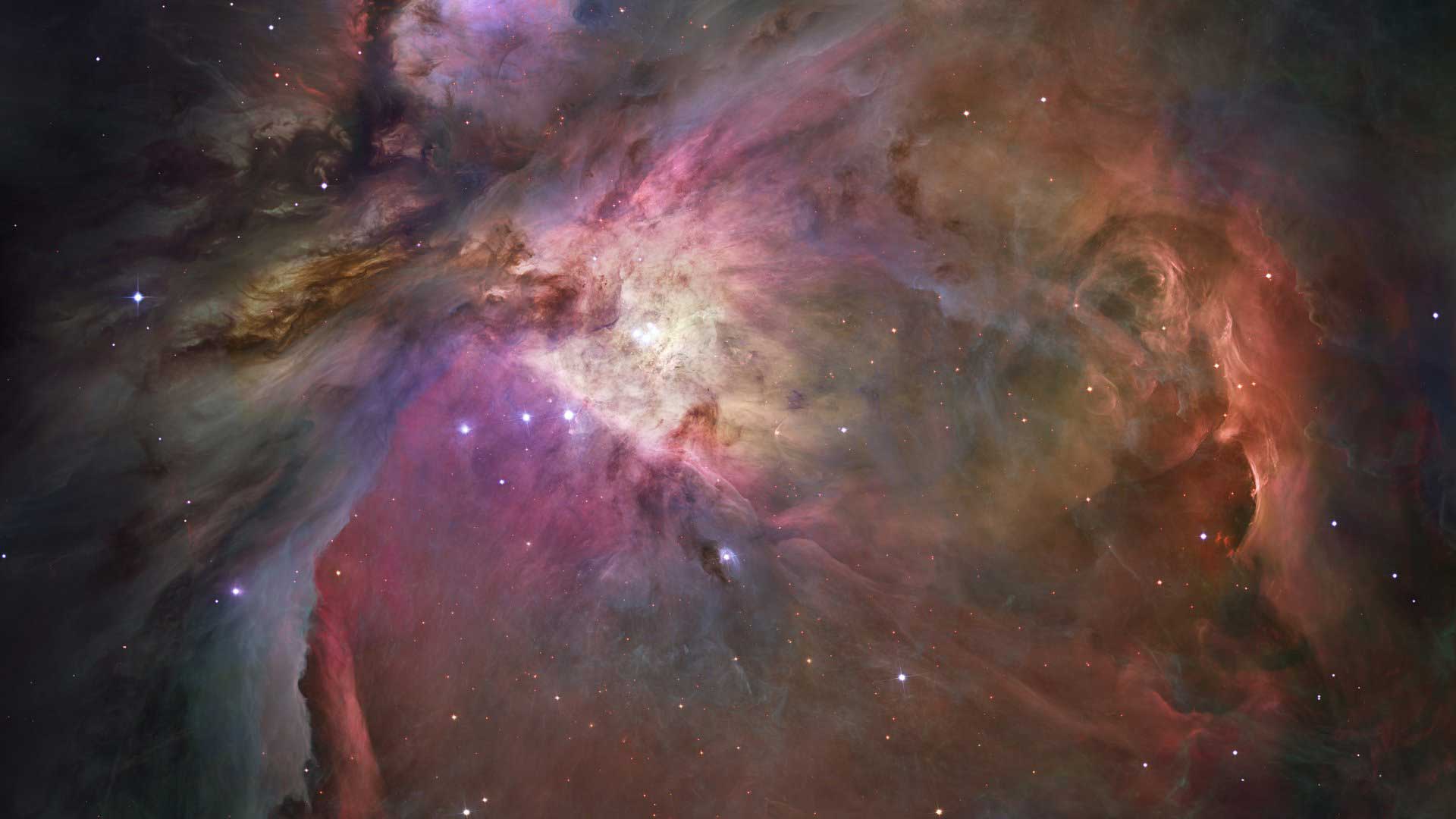
- Emission Nebulae: Clouds of ionized gas (H II regions) like the Orion Nebula, Lagoon Nebula, and North America Nebula. They glow in specific wavelengths as stellar radiation ionizes hydrogen, oxygen, and sulfur.
- Reflection Nebulae: Dust clouds that scatter light from nearby stars, appearing blue due to preferential scattering of shorter wavelengths (similar to why Earth's sky is blue).
- Planetary Nebulae: Shells of gas expelled by dying stars, often showing complex symmetric structures. Examples include the Ring Nebula (M57) and Dumbbell Nebula (M27).
- Galaxies: Distant star systems like Andromeda (M31), the Whirlpool Galaxy (M51), and countless others. Galaxies are particularly challenging due to their low surface brightness.
- Star Clusters: Open clusters like the Pleiades (M45) and globular clusters like M13. While brighter than nebulae, they still benefit from dark skies and careful processing.
- Supernova Remnants: Expanding shells from exploded stars, such as the Veil Nebula and Crab Nebula, often showing intricate filamentary structure.
Essential Equipment Overview
Deep-sky astrophotography requires three core components working together: a stable tracking mount, a telescope or camera lens for light gathering, and a sensitive camera for detection. Each component has specific requirements for successful imaging.
Tracking Mount
The equatorial mount is the foundation of any deep-sky imaging rig. Unlike a simple tripod, an equatorial mount rotates at Earth's sidereal rate (one rotation every 23 hours, 56 minutes) to keep stars fixed in the field of view during long exposures. Key characteristics:
- Polar alignment precision: The mount's rotation axis must point at the celestial pole (within 1–5 arcminutes for most work). Poor polar alignment causes field rotation over time.
- Periodic error: Mechanical imperfections in mount gears create small tracking errors. Premium mounts have lower periodic error (±5 arcseconds or less), while budget mounts may exhibit ±20+ arcseconds, requiring guiding corrections.
- Payload capacity: The mount must handle the combined weight of telescope, camera, guide scope, and accessories with headroom. Operating near maximum capacity degrades tracking precision.
- Autoguiding compatibility: Most modern imaging benefits from autoguiding—using a second camera watching a guide star to send real-time tracking corrections to the mount.
Optical System
Telescopes and camera lenses gather light and project it onto the camera sensor. The choice depends on your targets and imaging goals:
- Refractors: Lens-based telescopes offering high contrast and minimal aberrations. Apochromatic (APO) refractors with ED or fluorite glass elements minimize chromatic aberration. Popular for emission nebulae and galaxies.
- Reflectors: Mirror-based telescopes like Newtonian reflectors provide large apertures at lower cost but require periodic collimation (optical alignment). Fast focal ratios (f/4–f/5) enable shorter exposures.
- Schmidt-Cassegrain (SCT) and Ritchey-Chrétien (RC): Compact catadioptric designs folding the light path for portability. Longer focal ratios (f/8–f/10) suit smaller galaxies and planetary nebulae.
- Camera lenses: Fast wide-angle lenses (f/2.8 or faster) excel at large nebulae and Milky Way widefield imaging. Modern lenses with low coma and aberration work well for astrophotography without modification.
Camera Selection
Dedicated astronomy cameras and modified DSLRs/mirrorless cameras each have advantages:
- Cooled astronomy cameras: Thermoelectric cooling reduces sensor noise (dark current), enabling longer exposures and better faint signal detection. Often use monochrome sensors paired with filter wheels for maximum sensitivity.
- DSLR/mirrorless cameras: More affordable entry point with color sensors (Bayer matrix). Stock cameras have infrared-blocking filters that reduce H-alpha sensitivity; "astro-modified" cameras have this filter removed or replaced for full-spectrum imaging.
- Sensor size considerations: Full-frame (36×24mm) sensors provide wider fields at a given focal length compared to APS-C (23.6×15.6mm) or smaller formats, useful for large nebulae and widefield imaging.
Acquisition Fundamentals
Capturing deep-sky images involves far more than pointing the telescope and pressing the shutter. Systematic acquisition planning maximizes image quality while minimizing wasted time on equipment failures or poor data.
Exposure Planning
The exposure triangle of ISO (gain), exposure length, and frame count determines your final image's signal-to-noise ratio:
- ISO/Gain selection: Higher ISO increases sensor sensitivity but also amplifies noise. Modern sensors typically perform best between ISO 800–3200 for DSLRs, or unity gain (often 100–200 gain setting) for dedicated astronomy cameras.
- Exposure length: Longer exposures capture more light per frame but require better tracking and darker skies. Typical ranges: 30–120 seconds for stock DSLRs under moderate light pollution, 3–10 minutes for narrowband with cooled cameras, 15 seconds–2 minutes for unguided or star-tracker imaging.
- Frame count (integration time): Total exposure time matters more than individual frame length. 100 frames × 60 seconds (100 minutes total) generally produces better results than 20 frames × 300 seconds (also 100 minutes), as stacking many frames averages out random noise more effectively.
Focusing Technique
Critical focus is non-negotiable for sharp stars. Manual focusing using live view and a Bahtinov mask (a diffraction grating producing a distinctive pattern when stars are in focus) ensures consistency. Electronic focusers allow remote adjustment and automated focus routines that compensate for temperature-induced focus drift during the night.
Dithering Between Frames
Moving the telescope slightly (typically 3–10 pixels) between exposures randomizes sensor defects across frames. When stacked, dithering eliminates hot pixels, reduces amp glow (sensor readout artifacts), and minimizes walking noise (systematic errors from imperfect flat fields). Most acquisition software automates dithering via mount commands between exposures.
Calibration Frames Explained
Raw light frames contain systematic errors from your optical and sensor system. Calibration frames characterize these errors so they can be subtracted or divided out during processing.
Dark Frames
Dark frames are exposures taken with the lens cap on, matching the temperature, exposure length, and ISO of your light frames. They capture thermal noise (dark current)—randomly generated electrons in the sensor even without light. Subtracting master dark frames (the median or mean of many darks) removes hot pixels and pattern noise.
When to capture: At the same temperature as your imaging session (±3°C), ideally immediately before or after the night's imaging. For cooled cameras at stable temperatures, darks can be reused for months. DSLR darks should be fresh due to ambient temperature variation.
Flat Frames
Flat frames measure the relative sensitivity across your sensor, capturing dust shadows (donuts), vignetting (brightness falloff at frame edges), and optical aberrations. Captured by photographing a uniformly illuminated white surface (flat panel or twilight sky), flats are divided into light frames to normalize the signal.
Critical requirements: The focus and any filters must match your light frames exactly. Flats must be taken with the exact same optical configuration—moving anything requires new flats. Exposure length doesn't need to match, but histogram should peak around 40–50% to avoid sensor nonlinearity.
Bias Frames
Bias frames (or offset frames) are the shortest possible exposures (often 1/4000 second or minimum shutter speed) with the lens cap on. They capture read noise—the electronic noise floor of the sensor's readout circuitry without dark current contribution. Bias frames are subtracted from dark frames and flat frames during calibration to isolate their unique contributions.
Usage note: Many modern workflows skip bias frames when using dark frames, as the dark already includes bias. However, when capturing flats at different exposure lengths than lights, bias frames become necessary.
Dark Flat Frames (Optional)
Dark flats are dark frames shot at the same exposure length as your flat frames. They're subtracted from flats before flat calibration to remove thermal noise from the flat fields. Primarily used when flat frame exposures are significantly longer than a few seconds.
Narrowband vs Broadband Imaging
The choice between narrowband and broadband filters fundamentally changes your imaging strategy and target selection.
Broadband (RGB) Imaging
Broadband filters allow all wavelengths within each color band to pass—roughly 100+ nanometers of bandwidth for red, green, and blue. This produces natural-color images showing objects as they'd appear to perfect human vision in space.
Advantages:
- Faster acquisitions—more light reaches the sensor per unit time
- Natural color reproduction matching visual observation
- Works for all target types including galaxies and reflection nebulae
- Single-shot color cameras (OSC) with Bayer matrices can capture all colors simultaneously
Drawbacks:
- Highly susceptible to light pollution, limiting use to dark-sky sites
- Lower contrast on emission nebulae compared to narrowband
- Moon phases significantly impact imaging window
Narrowband Imaging
Narrowband filters isolate specific emission lines—typically 3–12 nanometers of bandwidth. The most common filters target hydrogen-alpha (656.3 nm), oxygen-III (500.7 nm), and sulfur-II (672.4 nm). Narrowband only works on emission nebulae, as galaxies and reflection nebulae lack line emission.
Advantages:
- Dramatically improved contrast by rejecting light pollution and skyglow
- Imaging possible from suburban and urban locations
- Immune to moonlight (moon has minimal emission at these wavelengths)
- Reveals faint nebular structures invisible in broadband
- Can image nearly any night regardless of light pollution or moon phase
Drawbacks:
- Much slower—only ~1% of light passes the filter compared to broadband
- Requires long total integration times (often 10–30+ hours per target)
- Limited to emission nebulae (won't work for galaxies or reflection nebulae)
- Color information is false-color, requiring artistic color mapping choices
- Requires monochrome camera and filter wheel, or expensive narrowband filters for OSC
Processing Workflow Overview
Raw stacked images bear little resemblance to the final processed result. Deep-sky processing stretches the histogram to reveal faint signals buried below the visible threshold, requiring careful technique to avoid over-processing artifacts.
1. Calibration and Stacking
Software like DeepSkyStacker, PixInsight, or Astro Pixel Processor applies calibration frames, aligns all light frames by star positions, and combines them using sigma-clipped averaging (rejecting outliers like satellite trails and cosmic rays). The output is a single high-signal 32-bit TIFF with linear histogram distribution.
2. Background Extraction and Gradient Removal
Light pollution, moonlight, and atmospheric extinction create uneven backgrounds that must be flattened. Dynamic Background Extraction (DBE) in PixInsight or gradient removal tools in other software model the background using sample points in areas without nebulosity, then subtract it.
3. Histogram Stretching
Linear data appears nearly black because faint nebulae occupy only the first few percent of the histogram. Non-linear stretching transforms the data so dim structures become visible while preserving star colors and preventing saturation. Common approaches include masked stretch (protecting bright stars), iterative stretching with linked STF in PixInsight, or curves adjustments in Photoshop.
4. Noise Reduction
Even after stacking, background noise remains visible. Multiscale noise reduction techniques decompose the image into spatial frequency layers, applying selective noise reduction to small-scale structures while preserving large-scale nebula detail.
5. Star Processing
Stars are often reduced in size or deemphasized to let nebula detail dominate. Techniques include morphological selection (creating star masks), deconvolution (sharpening slightly out-of-focus stars), and star reduction algorithms that selectively shrink stars without affecting nebulae.
6. Color Calibration and Balancing
For broadband RGB data, color calibration neutralizes color casts and balances channels. For narrowband data, creative color mapping assigns each emission line to RGB channels—popular palettes include Hubble Palette (SII→R, Ha→G, OIII→B), natural H-alpha mapping (Ha→R), and HOO bicolor (Ha→red/green, OIII→blue).
7. Final Adjustments
Contrast enhancement, saturation adjustments, sharpening (via multiscale processing or deconvolution), and detail enhancement bring out final structures. Careful iteration prevents over-saturated colors and "crunchy" textures from excessive sharpening.
Common Challenges and Solutions
Star Trailing
Cause: Mount tracking errors, poor polar alignment, or guiding failures.
Solution: Improve polar alignment to within 2–3 arcminutes, implement autoguiding, or reduce exposure length.
Amp Glow
Cause: Sensor readout circuitry emits infrared light that contaminates frames, appearing as a gradient along one edge.
Solution: Use dark frame subtraction, enable dithering, or upgrade to a cooled camera with better amp glow suppression.
Dust Donuts
Cause: Dust on the sensor or filters casts shadows that appear as dark rings.
Solution: Capture fresh flat frames before each session, clean sensor regularly with air blower or wet cleaning.
Bloated Stars
Cause: Slight defocus, coma (optical aberration), or over-saturation.
Solution: Use Bahtinov mask for critical focus, employ coma correctors for fast Newtonians, avoid over-exposing bright stars.
Gradient Issues
Cause: Light pollution, moonlight, or poor flat calibration.
Solution: Shoot fresh flats, use aggressive background extraction during processing, consider narrowband filters.
Low Signal-to-Noise
Cause: Insufficient total integration time or severe light pollution.
Solution: Increase total exposure time (aim for 2+ hours minimum for emission nebulae), image from darker skies, or use narrowband filters to reject skyglow.
Next Steps in Your Journey
Deep-sky astrophotography is an iterative learning process. Start with brighter, larger targets like the Orion Nebula (M42) or Andromeda Galaxy (M31), which are forgiving to beginners. As your polar alignment, guiding, and processing skills improve, progress to fainter, smaller targets.
Join online communities, share images for feedback, and study others' processing workflows. Every clear night provides opportunities to refine technique, test new equipment, and push the limits of what your gear can reveal.